Caring for Apple Trees in Excessive Heat
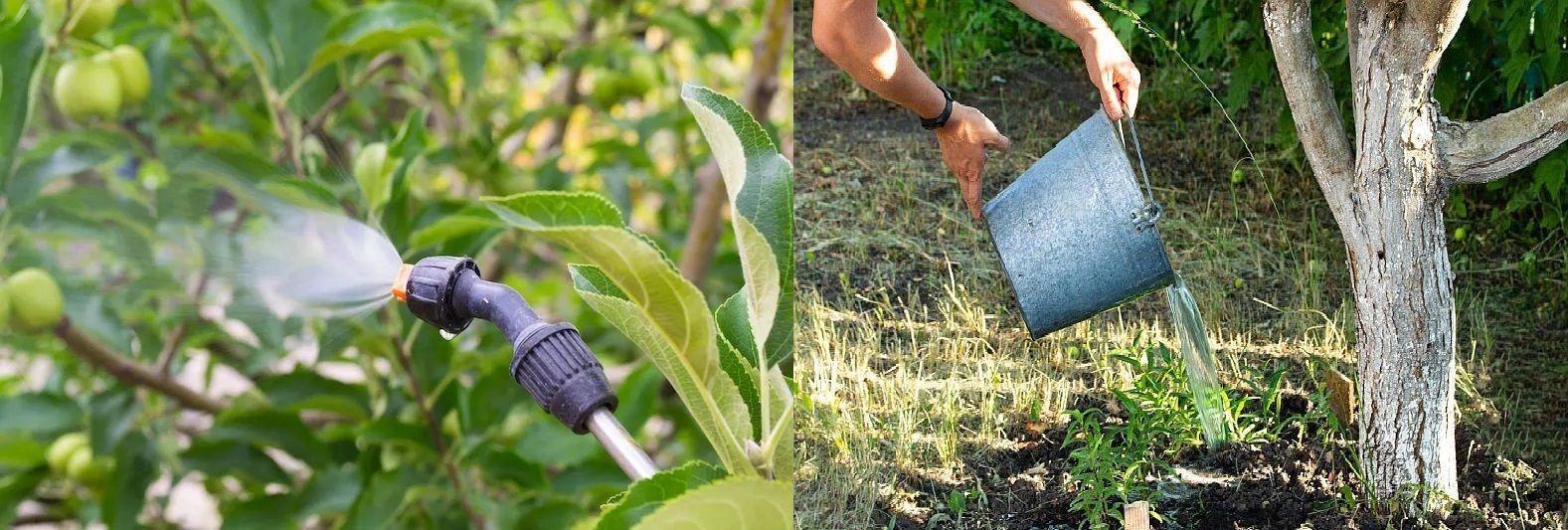
Managing apple trees during a Midwestern heat wave, or any other location, is a balancing act. You’re fighting pests and disease while trying not to add stress to trees that are already dealing with high temperatures and intense sun. Two practices become critical in these conditions: when (and whether) to spray, and how to water.
This article walks through practical guidelines for both, with an emphasis on heat stress, phytotoxicity risk, and deep, efficient irrigation.
When Is It Too Hot to Spray Apple Trees?
Spraying in hot weather is not just about air temperature at the moment you’re in the orchard; it’s about how spray residues behave on leaves and fruit once the sun is up and leaf temperatures climb.
Even in moderate climates, apple foliage can be sensitive to the combination of:
· High daytime temperatures
· Strong sun and low humidity
· Tender or recently injured leaves
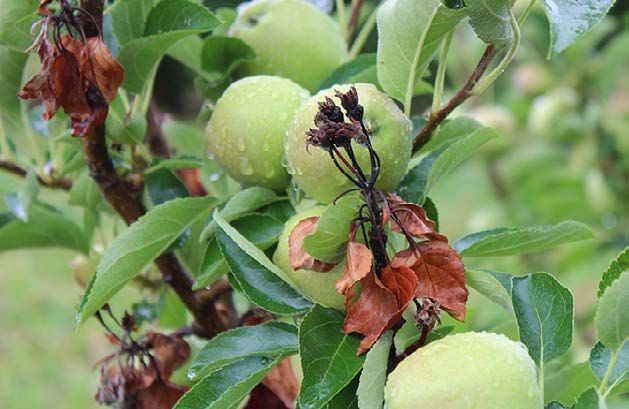
Leaf surface temperatures can sit well above the recorded air temperature—often 10°F or more on bright, calm days. That means a 90°F afternoon can put leaf tissue into ranges where certain chemistries, especially oils and “hotter” mixes, start to cause burn. If residues from a night spray remain on the foliage, they’re part of that thermal environment the next day.
Night Spraying Still Carries Daytime Risk
It’s intuitive to think, “I’ll spray after dark, so the temperature is fine.” The problem is that the spray doesn’t disappear at sunrise. Residues, stickers, and oils are still on the leaf when the tree faces its hottest hours. If nights are warm—mid‑70s°F and up—the tree has little chance to recover between days, and compounds that would be safe at 70°F can become risky at 90°F in full sun.
As a general, conservative rule of thumb for apples in hot, sunny conditions:
· Aim to spray when forecast highs are in the 70s to low 80s°F and nights are in the 50s–60s°F.
· Once daytime highs push into the upper 80s–90s°F with warm nights (around 70°F or higher), treat that period as too hot for oils and more aggressive tank mixes—even if you plan to spray at night.
This doesn’t mean you can never spray in heat, but it does mean you should be selective about products, adjuvants, and timing, and be ready to delay sprays if trees already show signs of stress.
Products That Need Extra Caution in Heat
While each label must be read in its own right, the following patterns are consistent with common extension and grower practice:
· Dormant and early‑season oils are used when temperatures are above freezing and ideally in the 50–70°F range. Once buds have pushed and tissues are active, oils become more likely to cause burn in warm spells.
· Summer oil sprays are often avoided once highs exceed roughly 80–85°F, particularly on drought‑stressed trees or those with tender new growth.
· Complex tank mixes of fungicides, insecticides, and strong adjuvants are more likely to show cumulative phytotoxicity when foliage is hot and sun‑exposed.
A practical example: if your forecast shows a high of 93°F, a low of 74°F, and clear skies, spraying a summer oil mix on apples—even at 9–11 pm—is a high‑risk choice. Leaf surface temperatures the next day, plus persistent residues, make foliar injury much more likely.
Watering Apple Trees During Heat Waves
Water management in hot weather is about depth and timing rather than constant, shallow applications. Established apple trees are surprisingly resilient if their roots can access moisture; young trees and light soils are where problems usually start.
In most orchard conditions, established apple trees will do well with about 1 inch of water per week during the growing season. That can come from rain, irrigation, or a combination of both. The key is not the number of events, but whether the water penetrates deeply enough into the root zone.
During hot, dry weather:
· Aim for deep soaking that wets the soil 6–12 inches down.
· In moderate soils (loams, typical Midwest orchard soils), this often means one thorough irrigation per week when rainfall is scarce.
· In very fast‑draining sands or gravel, moving to two deep irrigations per week during heat waves is often more effective than daily, shallow watering.
Chronically wet soil is just as stressful as drought, especially in heat. The goal is alternating cycles of thorough wetting and moderate drying, not keeping the root zone perpetually saturated.
Age and establishment level are crucial variables:
· Newly planted and young trees (1–2 years)
o Have small, shallow root systems and depend heavily on your irrigation.
o May require 1–3 waterings per week in summer, with frequency increasing during heat waves.
o Each event should be a deep soak, not a brief sprinkle. Volumes commonly range from a few gallons for small nursery trees up to a dozen or more gallons for larger young trees, depending on soil and planting size.
Established, bearing‑age trees
o Have roots that explore a larger volume of soil and can access deeper moisture.
o Often manage well on a single deep soak per week during hot, dry periods, provided soil has reasonable water‑holding capacity.
o In prolonged extreme heat without rain, increasing to two deep applications per week may still be warranted on lighter soils.
Daily overhead sprinkling that just wets the surface encourages shallow roots and can exacerbate heat stress. Deep, infrequent irrigation encourages roots to stay down where soil temperature and moisture are more stable.
Rather than relying solely on calendar‑based schedules, simple field checks will tell you whether your watering is adequate:
· A few hours after irrigation, dig a small hole at the dripline (or just inside it) to a depth of about 6 inches. The soil should feel moist and cool at that depth.
· Several days into a heat spell, repeat the check. If the soil at 6 inches is dry and crumbly, you likely need to increase irrigation frequency in that period.
· Mulch 2–3 inches deep, kept just away from the trunk and extending toward the canopy edge, helps reduce evaporation, buffer soil temperature, and make each irrigation more efficient.
These simple checks will calibrate your gallons‑per‑tree decisions far better than any one‑size‑fits‑all recommendation, especially across differing soil types and rootstocks.
Integrating Spraying and Watering Decisions in Heat
Spraying and watering decisions are linked. A tree that is already under drought stress will be more vulnerable to phytotoxicity and sunburn from otherwise routine sprays. In practice:
· Avoid running “hot” tank mixes or oils on trees that are visibly wilted or suffering from water stress. Stabilize soil moisture first.
· Water deeply and infrequently enough that roots occupy a cooler, more stable zone; these trees are better able to tolerate necessary sprays within label limits.
· Time critical disease or insect sprays for windows when temperatures are more moderate, even if that means adjusting your usual calendar slightly during heat waves.
For orchards in climates like the Chicago area, this often translates to a rhythm of early‑morning or evening irrigation, careful monitoring during 90°F+ spells, and a willingness to postpone or adjust sprays when the combination of heat, sun, and product choice raises the injury risk.
This publication may contain pesticide recommendations that are subject to change at any time. These recommendations are provided only as a guide. It is always the pesticide applicator's responsibility, by law, to read and follow all current label directions for the specific pesticide being used. Due to constantly changing labels and product registration, some of the recommendations given in this writing may no longer be legal by the time you read them. If any information in these recommendations disagrees with the label, the recommendation must be disregarded. No endorsement is intended for products mentioned, nor is criticism meant for products not mentioned. The author assumes no liability resulting from the use of these recommendations.
Backyard Orchard Management @ Royal Oak Farm Orchard
Backyard Orchard Management @ Royal Oak Farm Orchard is a blog for the home fruit tree grower providing information about fruit tree management, fruit tree pruning & training and Integrated Pest Management from the IPM Specialist and Certified Nurseryman at Royal Oak Farm Orchard, a 22,000 tree apple orchard and agri-tourism operation located in Harvard, Illinois.
Click or tap any title to read that post.