Fertilizer Protocol for Backyard Apple Growers
Using Organic Approach + Neptune’s Harvest
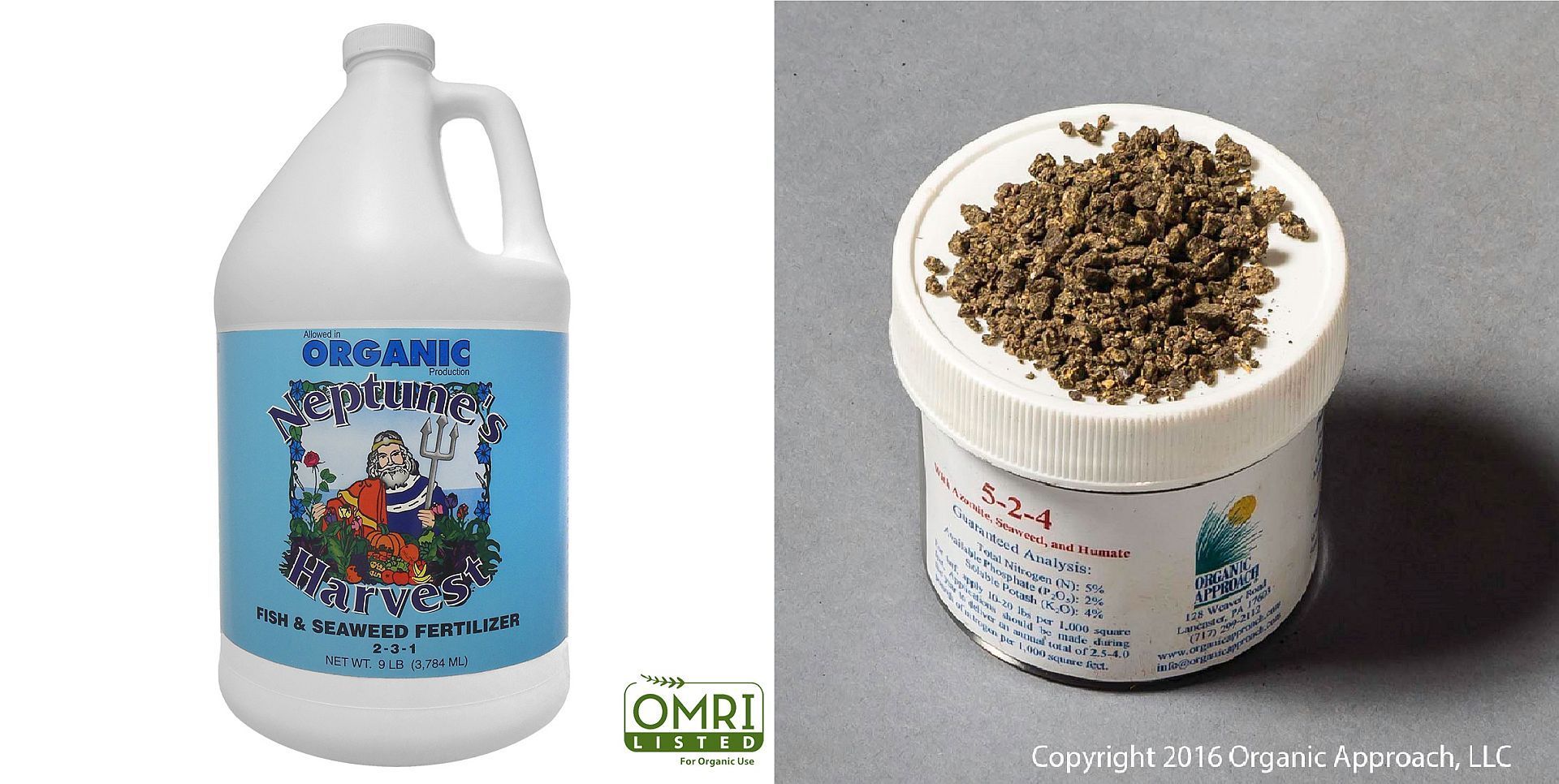
You can run a simple, safe fertilizer program for your backyard apple tree growing using a 2‑gallon sprayer by treating Neptune’s Harvest Fish & Seaweed Fertilizer along with Organic Approach's Axis 5-2-4 Premium Biological All-Purpose Organic Fertilizer With Biostimulants as a light, regular feed and keeping rates in line with the label for “trees and shrubs.” With just a few backyard trees, focus on consistency about every 2–3 weeks through late Spring and early summer rather than a singular high dose in Spring.
Neptune’s Harvest fish or fish‑and‑seaweed fertilizers are well‑known among organic growers because they provide gentle nitrogen, phosphorus, potassium, trace minerals, and natural growth compounds from fish and kelp. The standard label guidance for outdoor plants (including trees and shrubs) is a dilute solution used regularly through the growing season.
This program assumes you’re using Neptune’s Harvest Fish or Fish/Seaweed and that your trees are already planted in halfway decent soil. I recommend a practical organic program using dry, soil‑building fertilizers from Organic Approach (Organic Approach's Axis 5-2-4 Premium Biological All-Purpose Organic Fertilizer With Biostimulants in early spring and fall, with light, regular Neptune’s Harvest Fish/Seaweed feeds from bud break through early summer. Below is a backyard‑scale protocol you can tweak based on soil tests and vigor if necessary.
Assumptions and basics
- Trees: established backyard apples (3+ years in ground).
- Goal: good color, annual cropping, without pushing excessive vigor.
- Always adjust from soil test and leaf analysis when you have them.
Annual calendar using Organic Approach + Neptune’s Harvest
Late fall (after leaf drop)
- Spread 1–2 inches of good compost or well‑rotted manure from trunk out to dripline, avoiding trunk contact.
- Using Organic Approach's Axis 5-2-4 Premium Biological All-Purpose Organic Fertilizer With Biostimulants, apply at label turf/ornamental rates over the same zone and water in. Their materials are designed to build organic matter and microbials, which is ideal base fertility for apples.
The purpose here is to build soil organic matter and biology; slow mineral release for spring.
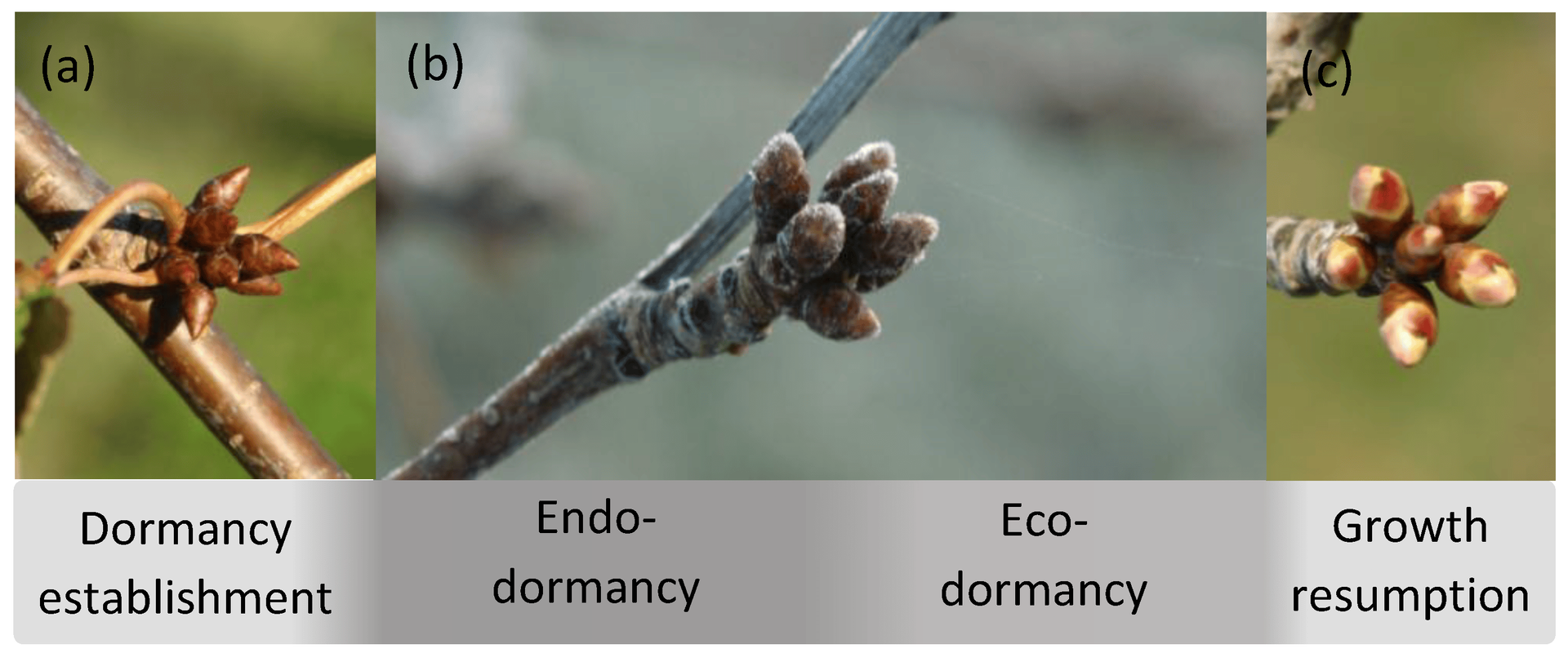
Early spring (dormant to silver tip)
- Broadcast the Organic Approach's Axis 5-2-4 premium granular organic fertilizer at roughly 1–2 lb. per mature tree, lighter on dwarfs, following label ornamental rates.
- Keep product from touching the trunk; concentrate between 1/3 and full dripline where feeder roots live.
- Water in if rainfall is not imminent.
The purpose her is to supply baseline N‑P‑K organically and balance what compost alone may not cover.
Bud break through June (main growth phase)
Use Neptune’s Harvest fish or fish/seaweed as your “spoon‑feeding” tool.
- Product: Hydrolyzed Fish 2‑4‑1 or Fish & Seaweed blend (both OMRI and labeled for trees).
- Rate (backyard trees):
- 1 oz per gallon of water as foliar or soil drench, every 2–3 weeks from tight cluster through about 6 weeks after petal fall.
- For a typical backyard tree, 1–2 gallons of finished solution per feeding is usually adequate; adjust by canopy size.
- Application:
- Foliar: apply as a fine mist to wet leaves (both sides) early morning or evening or,
- Soil drench: apply evenly under canopy on moist soil, then lightly water in.
The purpose here is frequent, light N plus micronutrients and biostimulants to support shoot growth, leaf function, and early fruit sizing without flushing rank growth.
Cutoff timing (midsummer)
- Discontinue nitrogen‑bearing feeds (fish) by about 6–8 weeks before your expected first frost to avoid tender late growth.
- If you want to do a late‑season root‑building pass, lean on low‑N mineral/biological products from Organic Approach (e.g., a Ca/P/biostimulant material, or just compost) rather than fish.
Every 2–3 years: micronutrient check
- Soil and/or leaf analysis every few years; if boron or other micros are low, correct with targeted materials at very low rates per university guidance (e.g., boron every 3 years at small doses).
- Organic Approach may have custom mineral blends or boron‑containing products; use only as indicated by tests to avoid any possible toxicity.
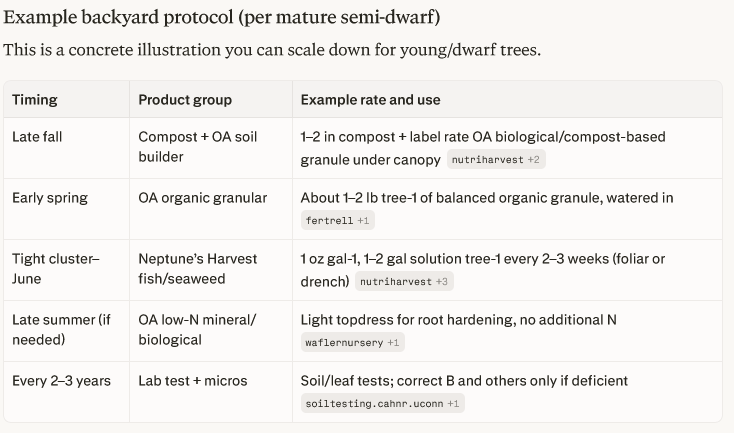
(OA=Organic Approach)
Fine‑tuning for vigor and age
- Young trees or weak vigor: push a bit more Organic Approach granular in early spring and keep Neptune’s Harvest on the 2‑week interval, watching shoot length.
- Overly vigorous trees (long whip growth, shading, lots of water sprouts): reduce or skip granular N and use Neptune’s Harvest mainly at bloom and early fruit set instead of all spring.
- Container or very dwarf trees: cut all granular rates at least in half and rely more on frequent dilute fish/seaweed fertigation.
If you later add an another Organic Approach product (kelp, humics, or a low‑salt N source), use Neptune’s Harvest as your main foliar feed and Organic Approach mainly as a soil amendment at planting or once in spring. Keep anything you tank‑mix at or below its lowest label rate and always jar‑test a small batch first.
Quick FAQ
Q: What happens if I miss a spray?
A: Don’t try to “catch up” by doubling the rate. Just resume your normal 1 oz per gallon mix at the next planned date. These feeds are meant to be gentle, steady nudges, not big corrective shots.
Q: Can I mix this with my disease or insect sprays?
A: Sometimes you can, but don’t assume you should. Always read the labels first. If both products allow tank mixing, do a small jar test with water and both materials. If you see clumping, separation, or sludge, do not mix them in the sprayer. When in doubt, run nutrition and crop protection in separate passes.
Q: Is this enough for very poor soil?
A: If your soil is extremely sandy, eroded, or low in organic matter, think of this program as a starting point. You may need extra compost, more aggressive organic soil amendments, or specific nutrients recommended by a soil test. The liquid feeds are not a substitute for rebuilding the soil.
Q: How do I know if I’m over‑fertilizing?
A: Warning signs include very long, soft shoots, delayed hardening in late summer, excessive water sprouts, and dark, overly lush foliage. If you see that, lengthen the interval between sprays, reduce or skip granular nitrogen, and give the trees time to balance out.
Q: Can I use the same program on pears or other tree fruits?
A: The general approach—compost plus balanced granular once a year, then gentle liquid feeds every few weeks—works for most tree fruits. However, some species (like pears) are naturally more vigorous, so you may want fewer sprays or an earlier cutoff to avoid pushing excessive growth.
Backyard Orchard Management @ Royal Oak Farm Orchard
Backyard Orchard Management @ Royal Oak Farm Orchard is a blog for the home fruit tree grower providing information about fruit tree management, fruit tree pruning & training and Integrated Pest Management from the IPM Specialist and Certified Nurseryman at Royal Oak Farm Orchard, a 22,000 tree apple orchard and agri-tourism operation located in Harvard, Illinois.
Click or tap any title to read that post.